Giant Trevally, also known as GT, are formidable predators found in warm tropical waters of the Indo-Pacific region. They are the largest in the jack family, growing up to 170 cm and weighing 80 kg. With their silvery-grey coloration, dark spots, and powerful swimming abilities, they are skilled hunters preying on small fish, crustaceans, and even juvenile turtles. Their aggressive behavior sets them apart, making them a significant species in both commercial fishing and game fishing. If you want to learn more about their biology, habitat, and conservation status, continue exploring the fascinating world of the Giant Trevally.
Taxonomy and Phylogeny
Taxonomy and phylogeny play a crucial role in understanding the classification and evolutionary relationships of the giant trevally within the Caranx genus. Belonging to the Carangidae family, this species was first scientifically documented by Peter Forsskål in 1775. Initially named Scomber ignobilis, it found its place in the Caranx genus, distinct within the Carangiformes order.
Notably, the giant trevally stands out as the largest in its genus and the fifth-largest in the Carangidae family, capable of reaching lengths of up to 170cm and weights of 80kg. One distinguishing feature of this species is its remarkable dorsal and anal fin structures, aiding in its identification.
Despite similarities in appearance with the Atlantic crevalle jack, a keen understanding of the Caranx genus's taxonomy and the evolutionary history of this species is essential for accurate classification and comprehension of its place within the broader marine ecosystem.
Description

Let's talk about the characteristics of giant trevally:
- Their habitat and behavior play a crucial role in understanding these fish.
- The art of fishing for them is a skill that requires patience and strategy.
These points will give you a deeper understanding of what makes these fish so fascinating and sought after by anglers.
Get ready to explore the world of giant trevally from a whole new perspective.
Characteristics of GT
Giant trevally, also known as Caranx ignobilis, possesses a striking appearance and impressive physical attributes that distinguish it as a formidable predator in the ocean. These apex predators are the largest members of the jack family, Carangidae, reaching lengths of up to 170 cm and weights of 80 kg. Their silvery-grey coloration with dark spots, especially in mature males, adds to their allure.
With streamlined bodies, forked tails, and powerful swimming abilities, giant trevally can reach speeds of up to 60 km/h, making them swift hunters in the water. Their aggressive hunting behavior further solidifies their reputation as skilled predators, sought after in both commercial and recreational fishing due to their impressive characteristics.
Habitat and Behavior
Inhabiting warm, tropical waters of the Indo-Pacific region, giant trevally are commonly found in diverse marine environments such as estuaries, shallow bays, and near reefs. These trevallies exhibit aggressive hunting behavior, preying on smaller fish, crustaceans, and even seabirds near the water's surface.
As they grow, they become more solitary, preferring to roam alone in search of prey. Juvenile giant trevallies often seek shelter in estuaries before venturing out into open waters. They reach sexual maturity at around three to four years of age, with spawning activity usually occurring during warmer months and possibly influenced by lunar cycles.
Understanding the habitat preferences and behavior patterns of giant trevally is essential for conservation efforts and sustainable fisheries management.
Fishing for GT
Fishing for GT involves targeting this formidable predator using a variety of effective baits. Anglers are drawn to GT for its aggressive nature and the thrilling fight it puts up when hooked. Common baits include squid, octopus, and various fish species that entice these powerful fish.
GT fishing isn't just a recreational activity but also a significant commercial pursuit. Hawaiian waters see around 10,000 pounds of GT caught annually, while Asian regions land between 4,000 and 10,000 tons.
Despite its popularity, the GT population remains sustainable, classified as Least Concern by the IUCN. This status ensures that GT fishing can continue as a responsible and environmentally conscious activity.
Distribution
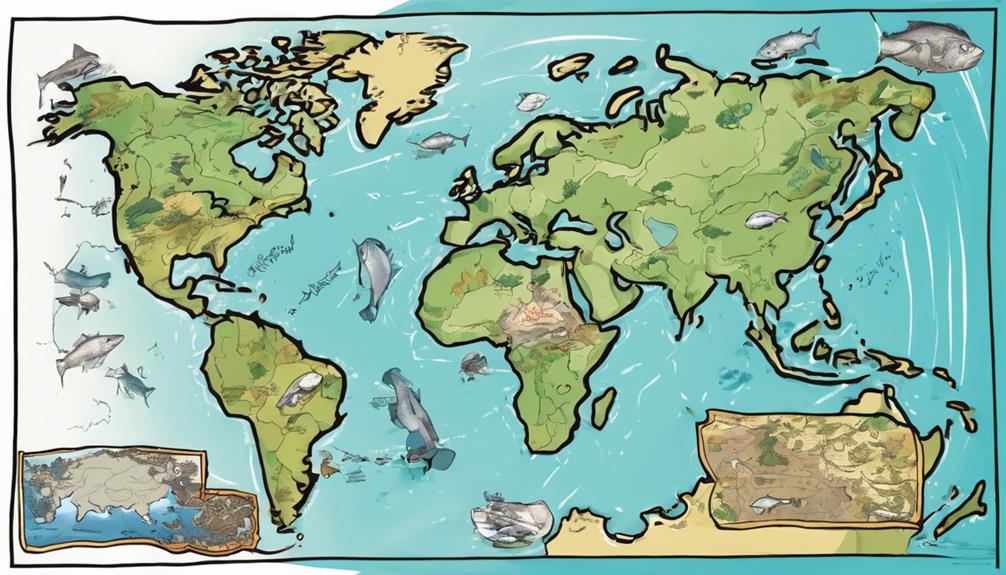
Giant trevally have a vast geographic range, spanning from the Red Sea to the Hawaiian Islands and southern Japan to northern Australia. They're adaptable fish, thriving in various habitats from estuaries to offshore marine environments.
Understanding their distribution and habitat preferences can provide insight into their behavior and ecological significance.
Geographic Range
The Giant Trevally, Caranx ignobilis, can be found in the tropical waters of the Indo-Pacific region. They span from the Red Sea to the Hawaiian Islands and from southern Japan to northern Australia. These powerful fish are known to inhabit various marine environments, including estuaries, shallow bays, and offshore banks.
Giant trevallies are commonly found at depths ranging from 10 to 188 meters in tropical climates with temperatures between 26-29°C. Notably, there have been reports of hybridization with Caranx melampygus in Hawaii, indicating potential genetic interactions within their distribution range. This wide geographic range showcases the adaptability and widespread presence of the Giant Trevally in diverse marine ecosystems.
Habitat Preferences
Inhabiting a diverse range of marine environments, the Giant Trevally demonstrates remarkable adaptability to various tropical waters in the Indo-Pacific region.
As juveniles, they seek refuge in estuaries, shallow bays, and lagoons before moving to offshore and inshore habitats as adults.
These fish are commonly found near coastal waters, reefs, and other structures that offer protection and abundant prey.
The Giant Trevally's distribution range spans from the Red Sea to the Hawaiian Islands, and from southern Japan to northern Australia.
With their ability to thrive in such varied habitats, these impressive predators have earned a reputation as one of the most widespread and versatile species in the marine ecosystems of the Indo-Pacific region.
Habitat
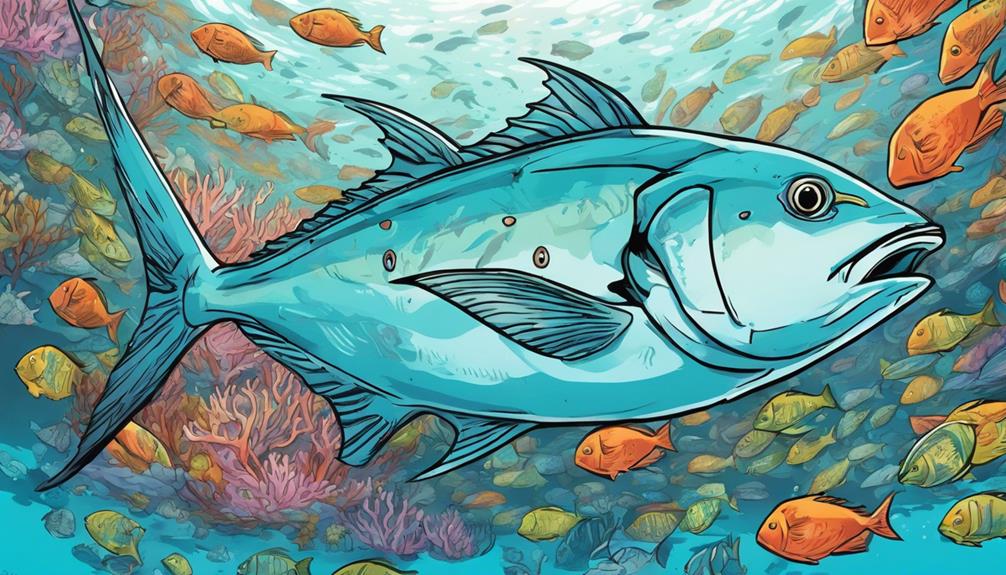
Nestled among the warm, tropical waters of the Indo-Pacific region, giant trevally have a diverse range of habitats. As juveniles, they can be found in estuaries, shallow bays, lagoons, and near reefs, where they seek shelter and abundant food sources.
These fish are known to forage near sharks, seals, and dolphins in their coastal habitats, utilizing the proximity to these larger marine animals for protection and to target shared prey. Giant trevallies are typically found at depths ranging from 10 to 188 meters, adapting to various water conditions within their geographic range.
From the Red Sea to the Hawaiian Islands, and from southern Japan to northern Australia, these impressive predators navigate the coastal waters with agility and prowess. Their ability to thrive in different habitats showcases their adaptability and predatory nature, making them a vital part of the diverse marine ecosystems they inhabit.
Biology and Ecology
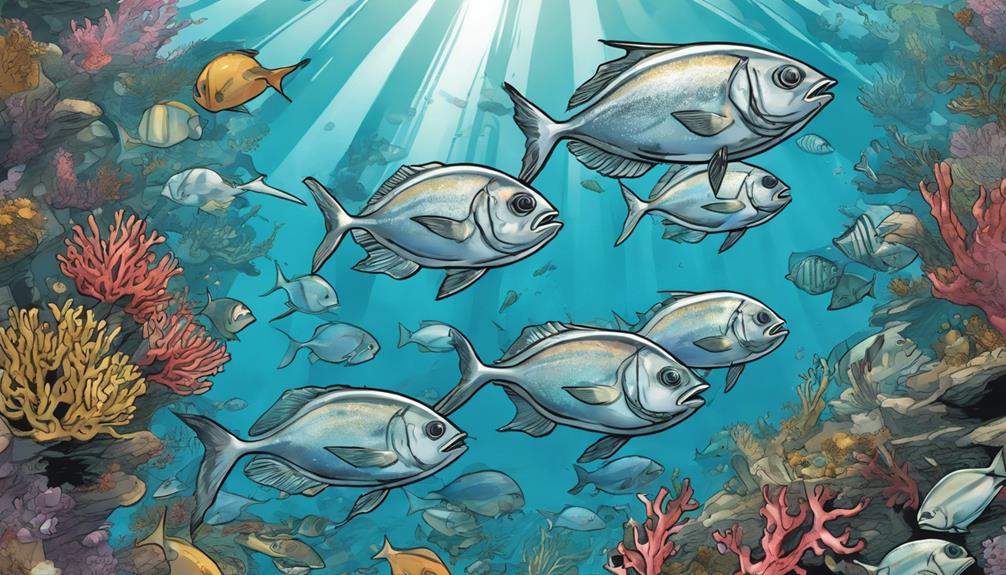
You're about to learn about the fascinating biology and ecology of giant trevally. Their habitat and behavior, diet and feeding habits, and reproduction cycle are key aspects that contribute to their role as apex predators.
Understanding these factors provides insight into the intricate life of this majestic fish.
Habitat and Behavior
Giant trevally typically roam the tropical waters of the Indo-Pacific region, showcasing a diverse array of behaviors and habits crucial to their ecosystem. These apex predators are solitary fish once mature, but they come together in schools for reproduction. They reach sexual maturity at around 54 to 61cm in length and three to four years old, with spawning linked to warmer months and lunar cycles.
Found in both offshore and inshore marine environments, giant trevally exhibit varied hunting patterns and are powerful predatory fish capable of growing up to 170cm long and weighing up to 80kg. Their wide distribution under various names highlights their significant role in maintaining the balance of their ecosystems.
Diet and Feeding
In understanding the biology and ecology of giant trevally, exploring their diet and feeding habits provides valuable insights into their role as fierce predators in the marine ecosystem. These predatory fish are opportunistic feeders, preying on smaller fishes, crustaceans, eels, birds, and even juvenile turtles.
Often spotted foraging near sharks, seals, and dolphins, giant trevallies play a crucial role in the marine ecosystem's balance and dynamics. Found in warm coastal waters of the Indo-Pacific region, including areas like Africa, Japan, and Australia, they inhabit shallow waters, bays, estuaries, and reefs where they actively hunt for prey.
Their feeding behavior as marine predators showcases their importance in maintaining the health of coastal ecosystems.
Reproduction Cycle
During the warmer months, the reproduction cycle of giant trevally is intricately tied to lunar cycles. These powerful fish reproduce through spawning, releasing fertilized eggs that settle on substrates like rocks and corals until hatching.
The larvae then drift along currents until they develop enough to navigate independently. Juvenile trevally seek refuge in patch reefs near lagoons before venturing into open waters.
Females typically reach sexual maturity around 3-4 years, with males slightly lagging behind. The timing of spawning, influenced by lunar cycles, plays a crucial role in the successful reproduction of giant trevally, ensuring the continuity of their population in the vast oceans.
Diet and Feeding
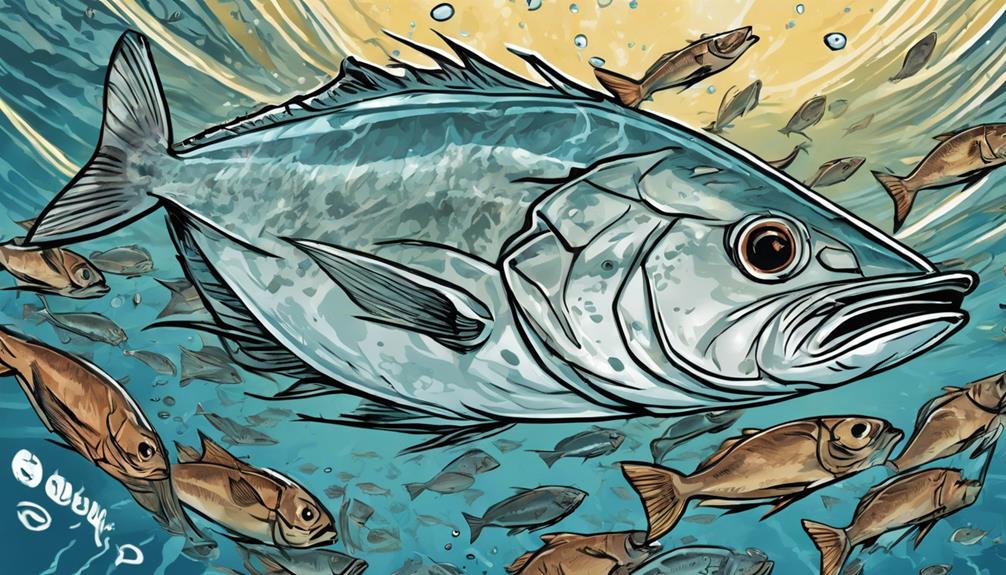
When discussing the diet and feeding habits of the giant trevally, one must acknowledge their role as fierce predators of smaller fishes and crustaceans. These opportunistic feeders are versatile hunters, known for their aggressive feeding behavior in warm coastal waters.
In addition to preying on smaller fishes and crustaceans, giant trevally can also consume eels, birds, or even juvenile turtles. Their diet is diverse, allowing them to adapt to different prey items and environments.
Giant trevally are often observed foraging near sharks, seals, and dolphins in their habitat, showcasing their ability to capitalize on various food sources. This behavior highlights their adaptability and resourcefulness in finding food.
Whether hunting alone or in groups, giant trevally are skilled predators that play a crucial role in maintaining the balance of marine ecosystems.
Life History
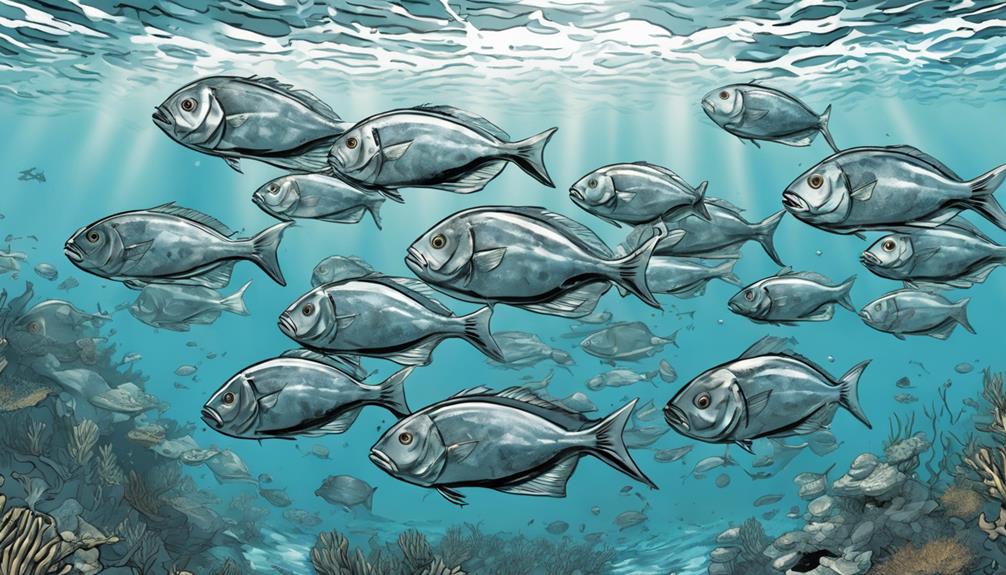
Reproducing through spawning in late spring and summer, giant trevally engage in a vital life cycle process essential for their survival and species propagation. After spawning, fertilized eggs are carefully deposited on substrates like rocks and corals. Once hatched, larval trevally embark on a crucial journey of drift along ocean currents until they grow large enough to navigate independently. These juveniles then make their way to patch reefs near lagoons, where they find shelter and food before gradually venturing into deeper open waters.
As giant trevally mature, females typically reach sexual maturity around 3-4 years of age, while males tend to reach this milestone slightly later. This progression marks a significant stage in their life history, paving the way for the continuation of their species. Understanding the complexities of their life cycle sheds light on the importance of conservation efforts to ensure the sustainability of giant trevally populations for generations to come.
Relationship to Humans
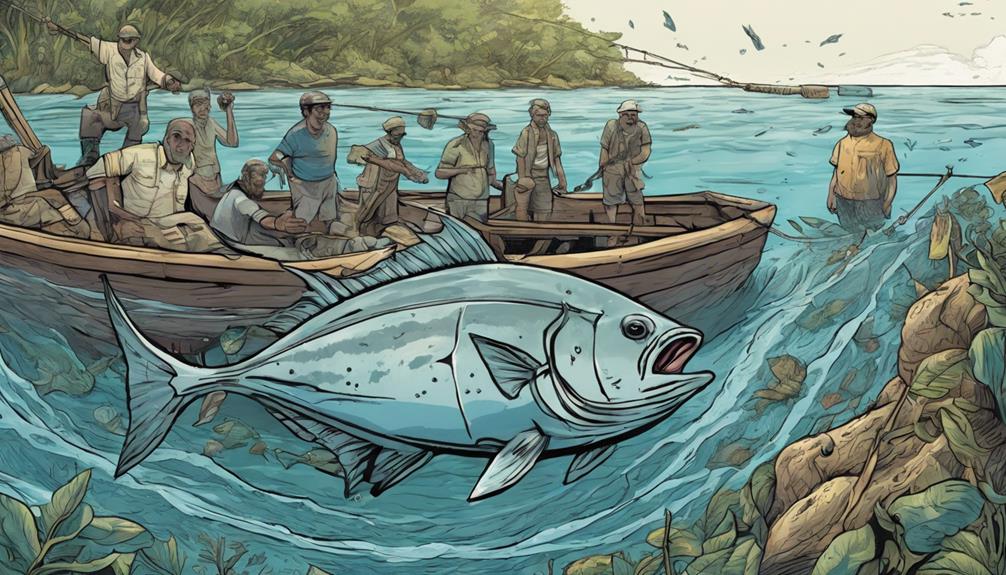
Giant trevally play a significant role in both commercial fisheries and the game fishing industry, contributing to economic activities and cultural practices. They're caught using nets, lines, bait, and lures, making them a sought-after species for both commercial and recreational fishing.
When it comes to their culinary value, giant trevally are considered both poor and excellent table fare. However, there's a risk of ciguatera poisoning associated with consuming them, which adds a cautionary note to their desirability as food.
Throughout history, these fish have been used by humans, with Hawaiians holding them in high regard. In modern times, giant trevally continue to be a valuable resource, contributing significantly to the economy through commercial fisheries and recreational fishing activities.
Whether it's for sustenance, sport, or cultural significance, the relationship between giant trevally and humans remains deeply intertwined.
Conservation

Conservation efforts are crucial to safeguarding the giant trevally species from potential threats. Giant trevally populations, currently listed as Least Concern on the IUCN Red List, are sensitive to fishing pressures because of their size and longevity. Depletion in certain areas has been observed, primarily due to recreational fishing activities.
To ensure the protection of this species, focused conservation efforts are essential. Future threats, such as habitat loss, pollution, and environmental changes, pose significant risks to giant trevally populations. By actively engaging in conservation initiatives, such as implementing sustainable fishing practices, establishing marine protected areas, and raising awareness about the importance of preserving these fish, we can contribute to the long-term survival of the giant trevally.
It's imperative to address these conservation challenges proactively to prevent further declines in population numbers and to maintain the ecological balance of marine ecosystems where giant trevally play a crucial role.
Interesting Facts

When exploring the fascinating world of giant trevally, one can't overlook their remarkable hunting capabilities and impressive speeds. Giant trevally, also known as GT, are apex predators that can reach speeds of up to 60 km/h. These formidable fish employ strategic tactics when hunting, often trailing monk seals and sharks to capitalize on opportunities. By following these marine creatures, giant trevally increase their chances of a successful hunt.
Measuring over 1.7 meters and weighing up to 180 pounds, giant trevally aren't only swift but also sizable predators in the ocean. However, consuming these fish comes with a cautionary note. Due to their diet, giant trevally may contain ciguatoxin, a toxin that can cause ciguatera poisoning in humans if ingested. This highlights the importance of being cautious when consuming fish that may have accumulated toxins from their prey.
Despite this risk, giant trevally remain a fascinating species renowned for their hunting prowess and impressive speeds.
Appearance

With their streamlined bodies adorned with distinct black spots and forked tails, the appearance of giant trevally is striking and unmistakable. These silvery-colored fish often display darker spots, while mature males can have a shiny black hue. The contrast between their silvery base and the dark spots creates a visually appealing pattern on their bodies. The forked tails add to their agility in the water, allowing them to swiftly navigate their warm coastal waters habitat in the Indo-Pacific region.
Giant trevallies stand out not only for their size but also for their unique appearance. The black spots serve as a form of camouflage in their environment, helping them blend in with their surroundings as they stalk their prey. Their silvery coloration aids in reflecting light, making them appear almost iridescent as they move through the water. These physical characteristics, combined with their predatory nature, contribute to the awe-inspiring presence of the giant trevally in the marine ecosystem.
Reproduction and Lifespan

After marveling at the striking appearance of giant trevally, it becomes fascinating to explore their reproductive habits and lifespan. Giant trevally reach sexual maturity at 3-4 years of age and approximately 60.0 cm in length. The spawning process for these fish takes place in shallow reefs and offshore banks. Once spawned, larval trevally drift along currents until they grow large enough to navigate independently. Interestingly, juvenile giant trevallies can often be found in estuaries before they venture into open waters.
Giant trevally, known for their impressive size, can grow to lengths of up to 1.7 meters and weigh around 60 kilograms. Additionally, these creatures have a considerable lifespan. Understanding their reproductive patterns, from spawning in specific locations to the larval drift stage, sheds light on the early stages of their life cycle. As they mature and reach sexual maturity, giant trevally exhibit a fascinating journey from estuaries to offshore banks, contributing to their unique characteristics and survival as a species.
Conclusion
Overall, giant trevally are fascinating fish known for their impressive size, strength, and predatory behavior. They can be found in tropical and subtropical waters around the world, and are highly valued by anglers for their challenging nature.
With their unique appearance and behaviors, giant trevally play a crucial role in marine ecosystems.
Next time you're near the ocean, keep an eye out for these magnificent creatures swimming by!