Calculate the weight of a Giant Trevally accurately with a specialized online calculator designed to enhance precision in sport fishing conservation efforts. Utilize precise measurements of length and girth to ensure accurate weight estimation, supporting ethical sport-fishing practices and conservation initiatives. Understanding factors like food consumption, seasonal variations, and growth patterns will enhance weight accuracy. Embracing technology for precise calculations not only benefits conservation efforts but also sustains the marine ecosystem.
Discover more about best practices for releasing fish and ensuring sustainability to contribute to the preservation of fish populations and ecosystem balance.
Importance of Accurate Weight Estimation
Accurate weight estimation plays a vital role in ensuring the effective conservation of giant trevally in sport fishing practices. When engaging in fly fishing for these majestic creatures, it's essential to uphold ethical principles that promote their sustainable fishery. Giant trevally, known for their strong and acrobatic fights, are highly prized among anglers. By accurately estimating their weight, you not only enhance the value and significance of your catch but also contribute to the preservation of their population.
In the realm of sport fishing, particularly when targeting species like giant trevally, releasing them back into the wild is a common practice to maintain healthy fish stocks. To determine whether a fish meets the criteria for release or if it should be kept, precise measurements of length and girth are crucial. By utilizing a simple formula based on these measurements, you can calculate the weight of the giant trevally with an acceptable margin of error, typically around 5%.
This accurate weight estimation method ensures that you can make informed decisions about the handling and release of these remarkable fish, ultimately supporting their conservation efforts.
How to Measure Length and Girth
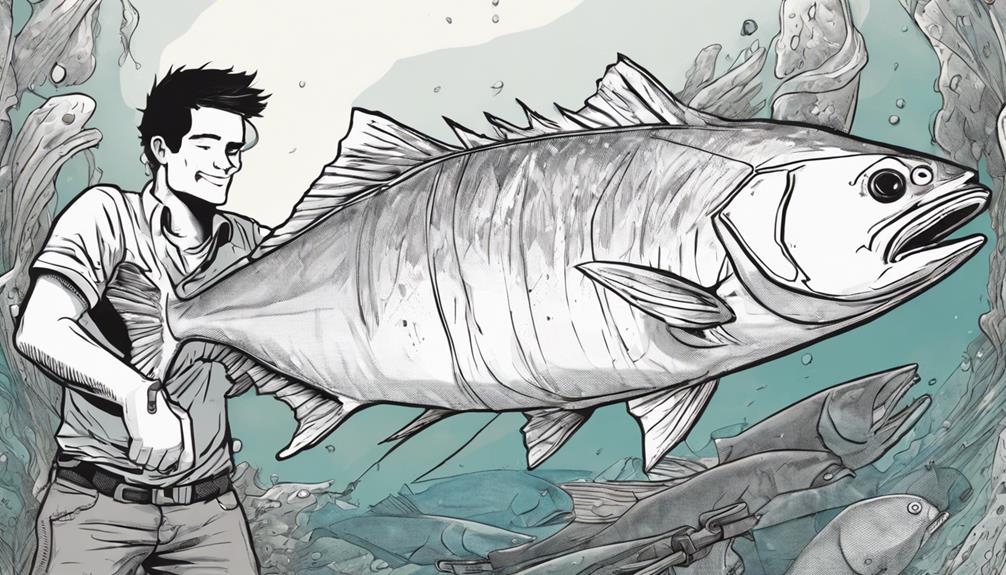
To ensure precise weight estimation of giant trevally, start by measuring the length from the center of the lower jaw to the fork of the tail. This length measurement is crucial for accurate weight estimation techniques.
Next, take the girth measurement just behind the pectoral fin to ensure girth calculation accuracy. Combining the length and girth measurements using a simple formula allows for an accurate weight calculation of the giant trevally.
Anglers often find the actual weights of landed giant trevallies surprising based on these precise measurements.
Calculating Giant Trevally Weight

When calculating the weight of a Giant Trevally, start by measuring its length and girth for accurate estimation. Utilizing weight estimation techniques based on these measurements is crucial for conservation implications, especially when releasing the GT back into the water.
Simple measuring equipment options include measuring the length from the jaw to the tail fork and the girth behind the pectoral fin. Precise weight calculations are essential for ethical sport-fishing practices and conservation efforts.
By using a formula that considers the GT's length and girth, you can reliably estimate its weight with around 5% accuracy. This accuracy is important for ensuring the well-being of the GT population and maintaining sustainable fishing practices.
Factors Affecting Weight Accuracy
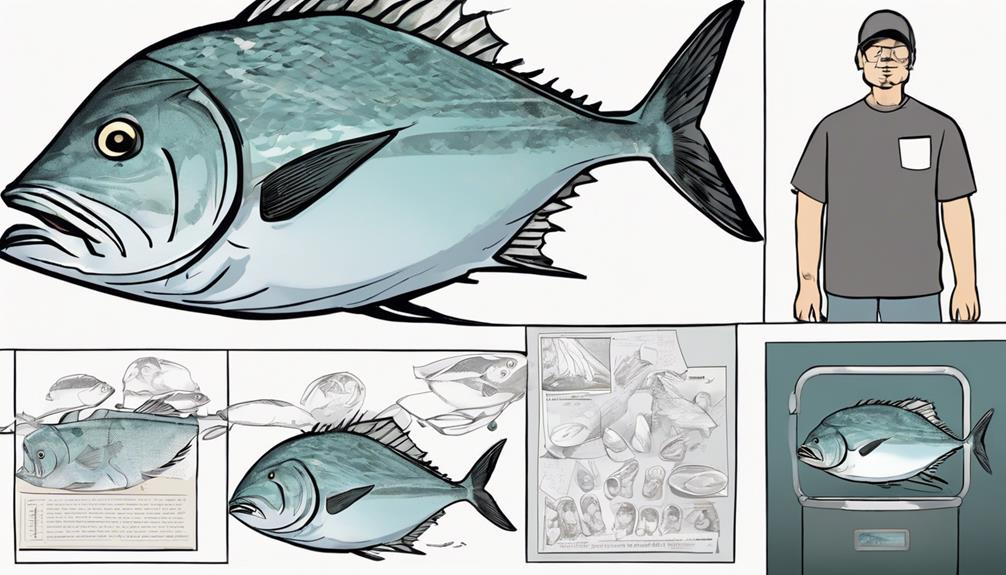
When estimating the weight of Giant Trevally, factors like food consumption impact, seasonal weight variations, and age and size influence can affect accuracy.
Understanding these points will help you make more informed decisions when calculating the weight of GTs.
Consider these factors carefully to ensure precise weight estimates for conservation and sport-fishing practices.
Food Consumption Impact
Understanding the impact of food consumption on the weight accuracy of giant trevally is crucial for accurate estimation. Factors such as food availability, feeding behavior, and growth patterns play a significant role in determining the weight of these fish.
The amount and type of prey accessible to giant trevally directly influence their weight, as their feeding habits vary based on food availability. Additionally, the growth patterns of giant trevally are closely tied to their food intake, affecting their overall weight.
Seasonal Weight Variations
Seasonal weight variations in giant trevally are influenced by spawning, feeding patterns, and environmental conditions. Spawning behavior can lead to weight changes as energy is redirected towards reproduction rather than growth.
Environmental factors such as temperature fluctuations and food availability can cause weight fluctuations throughout the year. Additionally, migratory patterns play a role in weight shifts, as trevally may travel long distances during certain seasons, affecting their feeding habits and overall body condition.
Age and Size Influence
To improve the accuracy of weight estimation for giant trevally, consider the influential factors of age and size. The relationship between age and size plays a crucial role in determining the weight of giant trevally.
As these fish grow, their weight tends to increase, with larger individuals typically weighing more than smaller ones. Understanding the growth patterns of giant trevally is essential for precise weight estimation.
Accurate length measurements are fundamental for applying weight estimation techniques effectively. By taking into account age and size variations, the accuracy of weight estimation for giant trevally can be significantly enhanced.
This understanding of how age and size influence weight estimation is vital for accurately determining the weight of giant trevally catches.
Conservation Benefits of Correct Weight
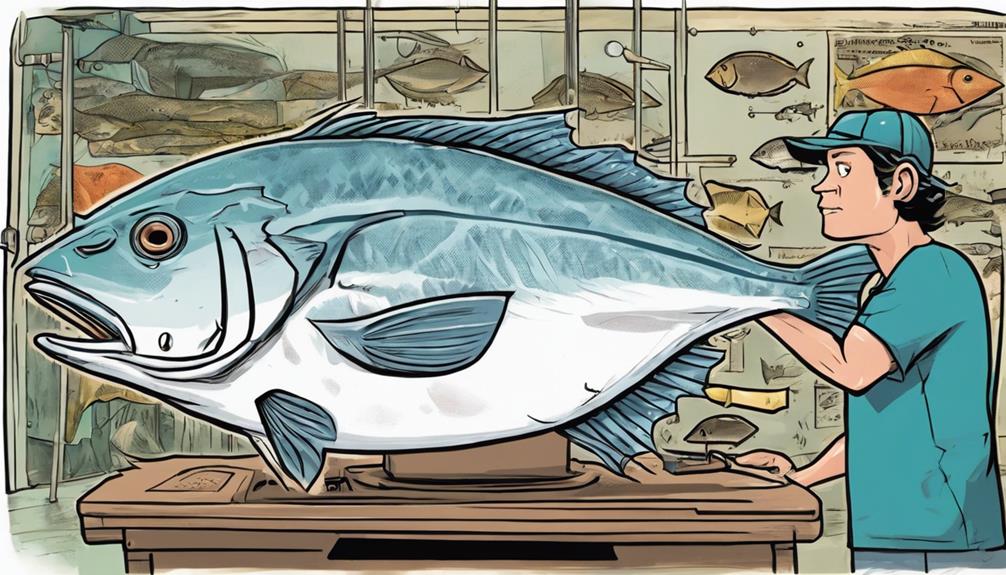
Releasing giant trevally with accurate weight measurements aids in protecting fish populations and contributes to conservation efforts.
By ensuring precise weight calculations, you play a vital role in safeguarding the ecosystem and promoting sustainable fishing practices.
Benefits of Accurate Data
Accurately estimating the weight of Giant Trevally is essential for ensuring their safe return to the water and promoting conservation efforts. By prioritizing data accuracy in weight calculation, sport fishing enthusiasts contribute significantly to marine biodiversity conservation.
Ethical practices in sport fishing stress the importance of precise weight measurements, aligning with conservation goals. Real weight values obtained through simple measurements of length and girth play a vital role in sustaining the fishery and highlighting the value of these magnificent creatures.
Achieving around +/- 5% accuracy in weight calculation not only validates the catch but also underscores the conservation impact of releasing Giant Trevally back into their natural habitat, safeguarding fish populations for future generations.
Protecting Fish Populations
By ensuring precise weight calculations for Giant Trevally, you actively contribute to the protection of fish populations and the conservation of marine biodiversity. Accurate weight estimation plays a vital role in marine conservation efforts, supporting sustainable fishery management and wildlife protection.
When releasing GT back into the water, correct weight assessment is crucial for their survival and the overall health of fish populations. Ethical sport-fishing practices emphasize the importance of accurate data to promote conservation benefits.
Using Technology for Precise Calculations

Utilizing technology for precise calculations greatly enhances the accuracy and efficiency of estimating the weight of giant trevally. The giant trevally weight calculator utilizes length and girth measurements to provide precise weight estimations, ensuring accurate measurements crucial for calculating the weight of these fish.
This technology offers precision benefits by offering a simple formula that delivers highly accurate weight estimates. By using technology for weight calculations, anglers not only benefit from the convenience and accuracy but also contribute to conservation efforts in sport fishing.
The calculator plays a significant role in conservation impact by enabling anglers to release giant trevally safely back into the water based on accurate weight estimates. Embracing technology in this manner not only improves the fishing experience but also supports the sustainability of giant trevally populations through responsible catch-and-release practices.
Best Practices for Releasing Fish
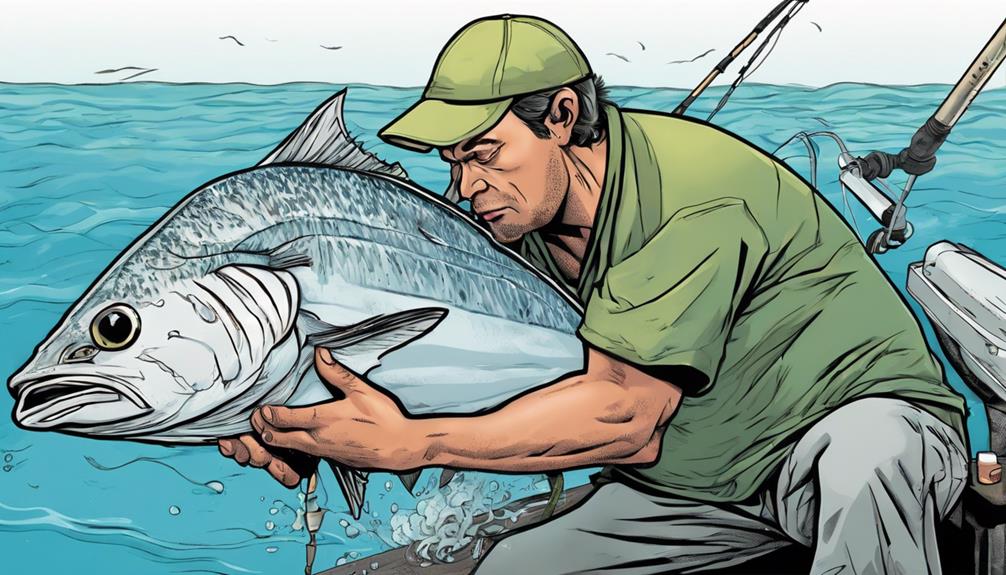
To ensure the well-being of fish populations, mastering the art of proper catch-and-release techniques is vital. When releasing fish, it's crucial to consider the fishing gear used. Barbed hooks can cause more damage than barbless hooks, making the latter a better choice for easier and safer releases. Being aware of catch limits is also essential. Understanding the regulations in your fishing area helps prevent overfishing and ensures sustainable fish populations for the future.
Effective release techniques play a significant role in the survival of the fish post-release. Handling fish with wet hands or using a rubberized landing net minimizes damage to their protective slime layer. When releasing the fish, support it underwater until it can swim away on its own, ensuring it has fully recovered from the fight.
Sustainability of Marine Ecosystems
Marine ecosystems play a critical role in supporting biodiversity and maintaining ecological balance. The diverse array of species and habitats within these ecosystems contributes to the overall health of the environment.
Sustainable practices, such as responsible fishing methods and conservation efforts, are essential for preserving marine biodiversity. Overexploitation due to human activities poses a significant threat to the delicate balance of these ecosystems.
By implementing sustainable practices in fishing, such as catch-and-release programs, we can help prevent the depletion of key species like the giant trevally and ensure their populations remain stable.
Monitoring the health of marine ecosystems is crucial in understanding the impact of human activities and guiding conservation efforts. It's imperative that we take actions to minimize our negative impact on marine environments and promote the long-term sustainability of these essential ecosystems.
Conclusion
Now that you know how to calculate the weight of a giant trevally accurately, you can contribute to the conservation of marine ecosystems by releasing fish responsibly.
By following best practices and utilizing technology for precise measurements, you can ensure the sustainability of these beautiful creatures for future generations to enjoy.
Remember, every little effort counts towards protecting our oceans and the incredible wildlife that call it home. Keep up the good work!